
Internet Marketing and AI blog
2018 Guide to FTC Disclosures on Facebook, Instagram, and YouTube
THIS ARTICLE HAS BEEN UPDATED.
THE 2019, UPDATED VERSION OF DISCLOSURE REGULATIONS CAN BE FOUND HERE.
When you think of Twitter wars, Taylor Swift may be the first thing that comes to mind.
However, the Federal Trade Commission is no stranger to conflict on social media, as many influencers can attest. As influencer marketing came to dominate the social media landscape, the FTC updated its endorsement guidelines to protect consumers. Just like other forms of advertising, the FTC requires influencers to disclose that they have a paid relationship with the companies they promote.
According to the FTC, proper disclosure makes clear that a material connection exists between the influencer and the brand (meaning the brand has given the influencer some form of compensation), so consumers are aware that it may not be a fully genuine endorsement and give it the appropriate level of credibility.
Wait, why are we hearing about these again?
The guidelines make the news from time to time because celebrities don’t do a good job following them, and the FTC has no problem calling them out.
Prominent examples include the more than 100 undisclosed sponsored posts by the Kardashian/Jenner clan. Then the FTC sent warning letters to 90 Instagram celebrities and influencers like Rihanna and Sofia Vergara in April of 2017, and another 21 in September. The letters reminded the influencers of the proper disclosure guidelines, and threatened them with fines to the tune of $40,000 if they didn’t get in line.
The guidelines are back in the news because the FTC has moved beyond stern warnings to monetary punishment. This October, they sued and settled their first court case regarding improper disclosure on social media, against Trevor Martin and Thomas Cassell, owners of the gambling site CSGO Lotto. The gentlemen paid social media influencers to promote the site, but the posts were not tagged as ads. An especially inflammatory example is Cassell’s own tweet, where he didn’t disclose his ownership stake in the company.
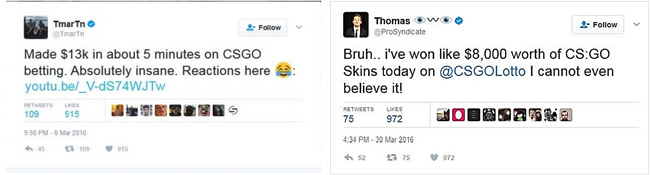
On its blog, the FTC responded, “Well, Bruhs, while we’re on the subject of things we cannot even believe, did either of you like consider clearly disclosing that you like owned the company – a material connection requiring disclosure under FTC law?”
The FTC isn’t playing.
New Changes to the FTC Social Media Disclosure Policies
Clearly the FTC takes these things seriously. Whether you’re a brand or an influencer, there’s no longer any excuse for you not to follow the guidelines, unless you’re comfortable getting sued by the FTC and paying massive fines.
Because the guides themselves are quite long, we’ve put together a handy guide that breaks down the essentials for you on Facebook, Instagram, and YouTube. For each platform, we’ve included the bare minimum of what’s required by the FTC, as well as additional suggested best practices. We’ve also included what is absolutely not okay according to the FTC.
FTC Disclosure Best Practices for Facebook
What you MUST do on Facebook:
- Provide a disclosure explaining the material connection at the beginning of your Facebook post. If your post is a video, you must state this at the beginning. This can be short and simple, but must make clear that you are being compensated by the brand. Examples include: “[Brand] sent me this free sample,” “[Brand] is giving me an exclusive promo code to share with my fans,” “Sponsored by...” or “Paid advertisement by...”
- If you are an employee and list your employer on your Facebook page, you may be considered an influencer under the FTC’s guidelines, so be sure to disclose that along with any posts promoting your company’s product or services. A simple disclosure such as “Check out my company’s new…” or “Disclosure: I work for this company” should suffice.
Additional best practices for influencer disclosure on Facebook:
- Include the #ad or #sponsored hashtag in the post description. Make this visible and above the fold, within the first few lines of your description.
- State that the post is “Sponsored by” and tag the brand.
- If posting a video, superimpose the hashtag #ad or #sponsored via an image or text overlay throughout the duration of the video, in case the video plays on mute.
- If using Facebook Live, disclose at the beginning of the video as well as periodically throughout the livestream.
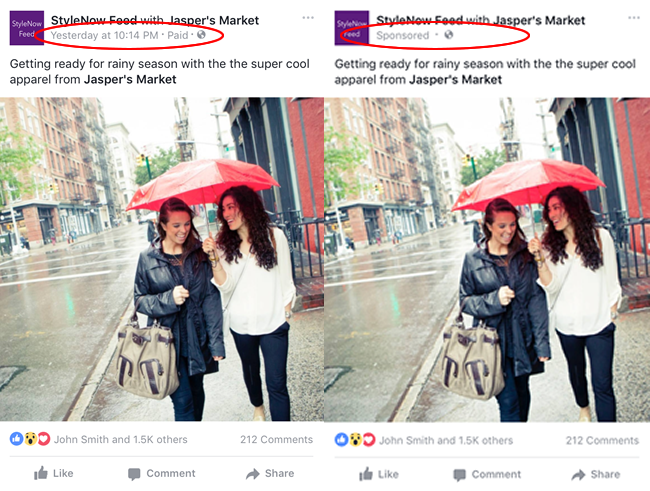
- Use Facebook’s built-in feature. Facebook’s branded content feature adds a gray “Paid” tag to your post and makes the post appear as a partnership between the influencer “with” the brand. To add the Paid tag, click the hands button when you’re creating your post, and then type the brand’s name into the With field.

If the brand then boosts the influencer’s post, the Paid tag changes to a Sponsored tag like other ads on Facebook.
What is NOT considered sufficient disclosure on Facebook:
- Simply saying “thanks” and mentioning a brand in the post, video, or description, without including a clear disclosure in the video or post itself.
- In the case of video posts or Facebook Live, only giving a disclosure in the description. FTC specifically states that this is unacceptable, since “many people might watch the video without even seeing the description page, and those who do might not read the disclosure.”
- Only using Facebook’s built-in feature, as it is not specifically approved by the FTC yet, and the light gray “Paid” tag is not necessarily “clear and conspicuous.”
FTC Disclosure Best Practices for Instagram
What you MUST do on Instagram:
- Include the #ad or #sponsored hashtag in the first three lines of the description (before the “more” button).
- Explain the material connection in the first three lines of the description. This can be short and simple, but must make clear that you are being compensated by the brand. Examples include “[Brand] sent me this free sample,” “[Brand] is giving me an exclusive promo code to share with my fans,” or “This post is sponsored by...”
- For Instagram Stories, superimpose the disclosure on the image or video.
Additional best practices for influencer disclosure on Instagram:
- The #ad hashtag needs to be clearly visible, so the best spot is at the beginning of your description.
- However, as long as you place it above the fold, you should be fine. The FTC requires that it be visible without users having to click “more.”
- State that the post is “Sponsored by” and tag the brand.
- If using Instagram Live, disclose at the beginning of the video as well as periodically throughout the livestream.
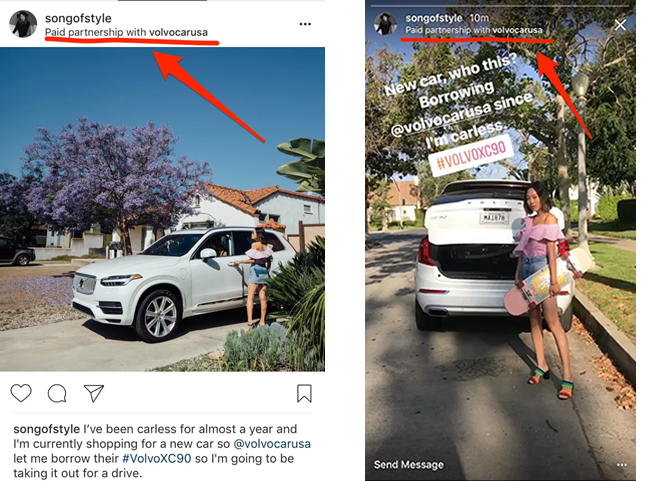
- Use Instagram’s built-in feature. Instagram’s feature marks both posts and Stories with a “Paid partnership” tag, which is an additional way to make the endorsement clear.
What is NOT considered sufficient disclosure on Instagram:
- Simply saying “thanks” and tagging a brand, without also including the #ad hashtag and specifying what you’re saying thanks for.
- Only tagging the brand, without also including the #ad hashtag and a clear disclosure.
- Combining the #ad into another hashtag, or creating your own version, such as #[brand]ad or #ambassador or #spon or #partnership, without also including the #ad hashtag and a clear disclosure.
- Recording your disclosure in an Instagram Story or Instagram Live, without also including the #ad hashtag in the description or superimposing your disclosure on the Story, since the audio may stay muted.
- Only using Instagram’s built-in feature, without also including the #ad hashtag and a clear disclosure. The FTC says, “on a photo platform, users paging through their streams will likely look at the eye-catching images. Therefore, a disclosure placed above a photo may not attract their attention.”
FTC Disclosure Best Practices for YouTube
What you MUST do on YouTube:
- Provide an audible disclosure explaining the material connection at the beginning of your video. This can be short and simple, but must make clear that you are being compensated by the brand. Examples include “[Brand] sent me this free sample,” “[Brand] is giving me an exclusive promo code to share with my fans,” or “Sponsored video by...”
Additional best practices for influencer disclosure on YouTube:
- Include a disclosure as well as the #ad or #sponsored hashtag in the description. Make this visible and above the fold, within the first few lines of your description.
- Superimpose the word #ad or #sponsored via an image or text overlay throughout the duration of the video, in case it plays on mute.
- State that the post is “Sponsored by” and mention the brand.
- Use YouTube's built-in feature. Under the Advanced Settings tab in the Video Manager, creators should check both boxes in the screenshot below to inform both YouTube and viewers that the video is a paid endorsement. Checking the second box adds a “Includes paid promotion” text overlay for the first 10 seconds of your video.

What is NOT considered sufficient disclosure on YouTube:
- Simply saying “thanks” and mentioning a brand in the video or description, without also including a clear disclosure in the video itself.
- Only giving a disclosure in the description. FTC specifically states this is unacceptable, since “many people might watch the video without even seeing the description page, and those who do might not read the disclosure.”
- Only using YouTube’s built-in feature, without also including a clear disclosure in the video itself. The FTC has said, “a disclosure in the lower corner of a video could be too easy for users to overlook.”
FTC Rules to Live By
Is all this making your head spin? Here’s what it boils down to.
When do posts need disclosure? Influencers should always clearly disclose when a brand is compensating them to promote a product on their behalf, no matter what the brand has offered as compensation: a free sample to review, a discount toward their services, cash, or something else. Never assume followers will just “know.”
If there’s no material connection with the company, a person on social media can still mention products they just happen to like without any disclosure.
How often do I have to disclose? Include a disclosure on every single post, on each and every platform used to promote the brand. A one-time disclosure is not sufficient. A disclosure must be listed in each post on behalf of a brand. Even if the company didn’t pay the influencer for a specific post, but they’re generally involved with that company, they still need to disclose that relationship.
What should a disclosure say? Here’s a simple template to follow: “#ad: This is a paid endorsement for [product] by [brand].” For every post, put this at the beginning of the description, before any other text. For any video, state it at the beginning. For image-only platforms like Snapchat, superimpose disclosures. Never hide your disclosure or sponsored tags under a click more link.
What hashtags should I use? Use standard sponsored hashtags. This is not a time to get clever. Use the standard, FTC-approved tags like #ad and #sponsored.
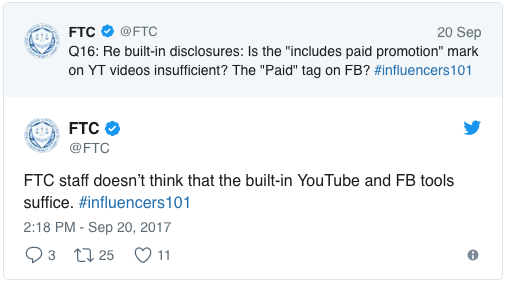
Can’t I just use the social platform’s built-in disclosures? Nope. To date, the FTC has not endorsed any of these, and has even publicly declared some of them insufficient.
Bonus tip: Download this helpful infographic from the FTC.
There’s no need to panic.
While these guidelines create a bit more work for influencers, they certainly don’t spell the end of influencer marketing on social media.
Brands have been using celebrity endorsements for years, and people still bought the products even though they knew the celebs were getting paid. Likewise, people will continue buying products after seeing their favorite influencers promote them, and brands will keep paying influencers the big bucks.
Just remember: When in doubt, err towards over disclosing. It’s better to be safe than sorry.
Michael Quoc is the founder and CEO of media lab Zipfworks, where he’s currently working on the ecommerce web app Dealspotr. The social platform allows brands to run sponsored campaigns with micro-influencers in its influencer marketplace, and gives the deal-sharing community a place to find the best deals. Previously, Michael worked at Yahoo as the Director of Product Management for their media lab, launching several innovative services in the live video and mobile social networking areas. He has been awarded nine patents in this field. Tweet him at @michaelquoc.